The Night They Decided I Was Only The Driver
I knew I had made a mistake the moment our car rolled beneath the lantern-lit oaks and stopped in front of the main entrance of the estate, because everything about the evening had already been arranged to remind me that I did not belong, from the white hydrangeas massed along the stone walkway to the string quartet on the terrace and the women stepping out of black town cars in satin gowns that looked as though they had never once been hung in an ordinary closet.
The wedding was being held at a private estate outside Charleston, one of those sprawling Lowcountry properties that wealthy families describe as old when they really mean expensive, and as the valet opened my door, I saw immediately that the entire place had been curated around one message: legacy, polish, pedigree, bloodline. My husband adjusted his cuff links before he even looked at me, and when he finally did, it was only with the faint irritation of a man checking whether the accessory beside him might embarrass him in public.
“Remember,” he said, “do not make a scene tonight.”
That should have been warning enough.
His younger sister had never liked me, not really, and his mother had disliked me from the beginning with such consistency that, over the years, I had almost come to admire the discipline of it. In their world, I was the regrettable early draft in Nathaniel Mercer’s life, the woman he married before his salary rose, before his club memberships multiplied, before his mother could curate his future properly. I came from a working family in Ohio. I had worked double shifts, taken freelance bookkeeping at night, and driven rideshare through freezing winters so Nathaniel could finish graduate school without drowning in loans. When he was still uncertain and ambitious and grateful, I had been the woman who believed in him. Once he began earning real money, his family slowly revised the story until I became the woman who had somehow trapped him before he had learned his worth.
Still, I went.
Not because I was wanted.
Because Nathaniel had said it would look bad if he arrived without me.
Not for my sake.
For his.
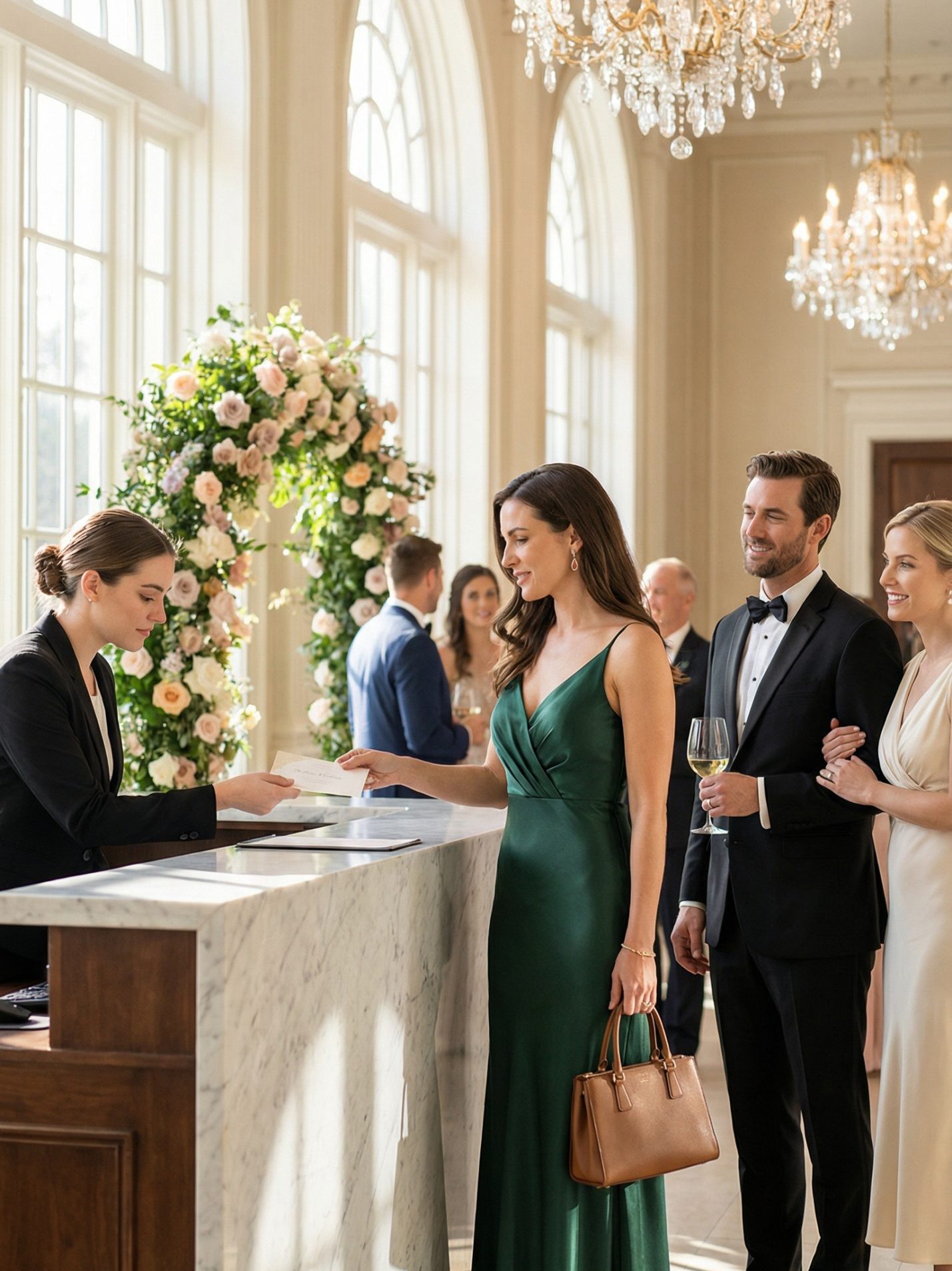
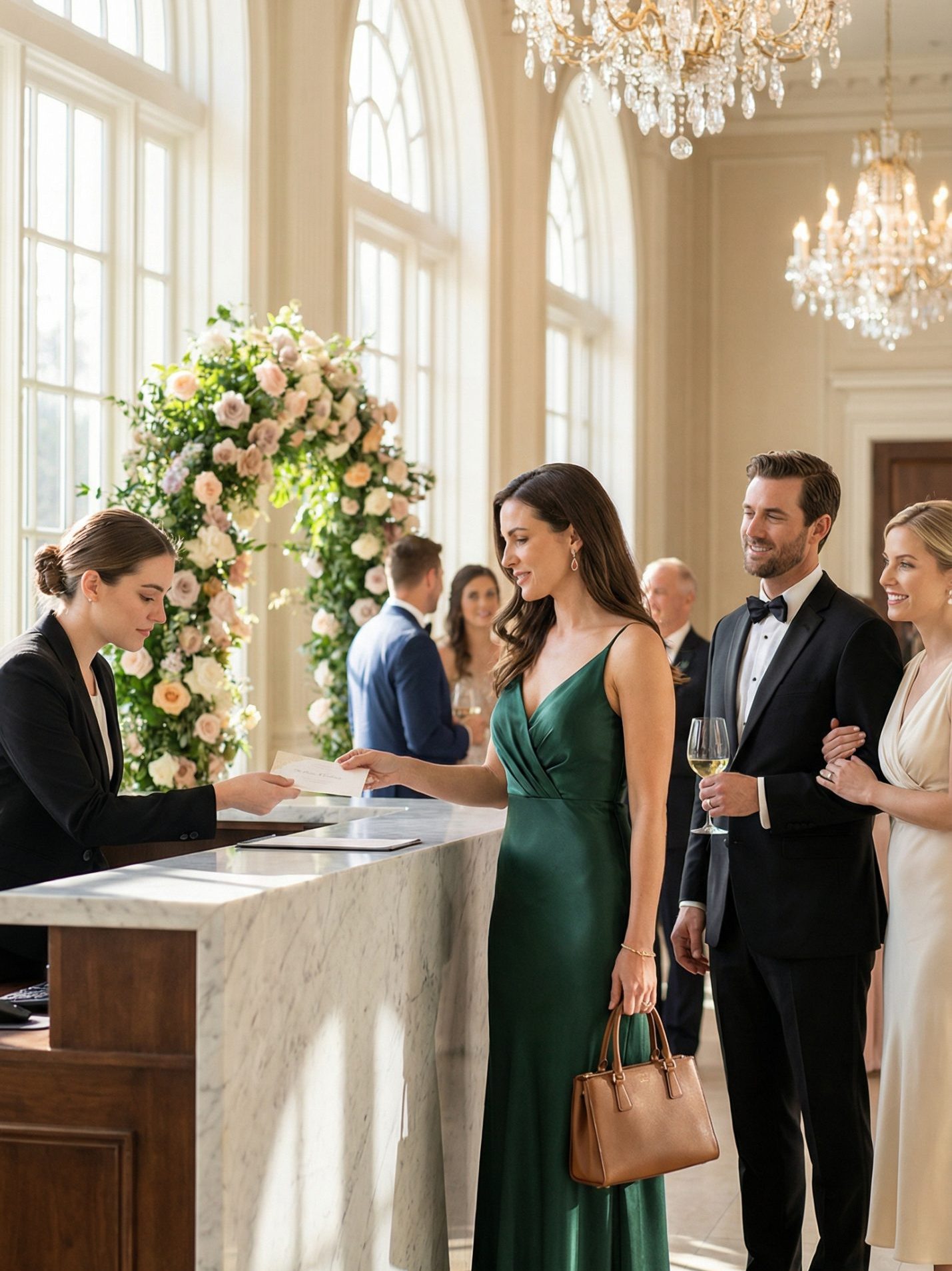
The humiliation began at the entrance.
A woman holding a tablet smiled warmly at him, checked the guest list, then frowned when she glanced at me.
“I’m sorry,” she said carefully, “but I don’t see your name here.”
Before I could respond, Nathaniel gave a short laugh and lifted one shoulder in the direction of the woman with the tablet, as if clarifying a misunderstanding that amused him.
“Her?” he said. “She’s just the driver.”
There are moments when shame arrives hot and immediate, but that was not what happened to me. My whole body went cold instead, so cold that for one second I thought I might actually stop feeling anything at all. The woman at the entrance looked confused. Nathaniel did not. He looked pleased with himself in that careless, glancing way men often do when they believe the cruelty will not cost them anything.
Behind him, two bridesmaids near the floral arch heard the remark and smiled into their champagne glasses.
Then Vivian Mercer appeared.
My mother-in-law moved toward us in pale blue silk with the graceful certainty of a woman who had spent her entire life walking into rooms already convinced the room belonged to her. She paused close enough that her perfume brushed the air between us and leaned slightly toward my ear.
“Did you really think you were invited?” she whispered. “How embarrassing.”
I looked at Nathaniel then, and what shattered me was not her insult, but his silence. He did not correct the lie. He did not say my name. He did not offer his arm, defend my place, or even pretend there had been a misunderstanding. Instead, he adjusted the front of his jacket and said to the woman at the check-in table, in the same tone someone might use while rescheduling a delivery,
“If anyone asks, just say she dropped something off and left.”
That was the exact moment my marriage ended.
Not legally.
Not theatrically.
Internally.
It was the instant I realized I was no longer standing beside a husband who had failed me. I was standing beside a man who had finally become honest in public about the way he had always seen me in private.
I lifted the silver-wrapped box I had been carrying and placed it carefully on the registration table.
“Then please make sure this gets to the bride,” I said quietly. “Consider it my wedding gift.”
Vivian narrowed her eyes. Nathaniel finally looked unsettled.
“What is that supposed to mean?” he asked.
I smiled at him, not because I felt calm, but because I had crossed so far past hurt that something clearer had taken its place.
“Just something they’ll remember.”
Then I turned, walked back to the car, and left before either of them could stop me.
I did not drive far. I parked two blocks away beneath a row of live oaks where the hanging moss blurred the streetlamps into gray ribbons, then turned off the engine and waited.
Because I knew exactly what was inside that box.
And I knew exactly what would happen when someone opened it.
The Gift Wrapped In Silver Paper
There was nothing illegal in the box, which made it even more effective, because people like the Mercers know how to protect themselves from scandal so long as the scandal remains abstract, but they rarely survive the sudden appearance of proof arranged neatly enough for strangers to understand at a glance.
I had assembled it the night before.
Three days earlier, while Nathaniel was in the shower, I had found the final piece inside a locked drawer in his study, tucked beneath account statements and club invoices as if carelessness had become so habitual to him that he no longer recognized risk when it stared back from paper. Once I found that last document, the entire structure snapped into focus with sickening clarity.
Inside the silver box I placed three things.
The first was a card addressed to Amelia Mercer and her fiancé, Henry Calloway.
Because family matters tonight, I thought you should know exactly what kind of family you are joining.
The second item was a set of printed emails between Nathaniel and Henry discussing financial manipulation so brazen and so poorly disguised that I almost laughed while reading them. They had been using a shell consulting entity to move money from Henry’s company accounts, concealing personal expenditures and wedding-related costs beneath vague operational language. Embedded in the correspondence were references to a luxury condo, private transfers, and efforts to keep the paperwork outside internal review until after the wedding.
The third item was the one that would break the evening open.
A paternity report.
Henry had a five-month-old child with another woman, one he had been supporting quietly while publicly preparing to marry Amelia, and several messages revealed exactly how desperately he had tried to silence the mother with cash routed through the same hidden accounts.
At the bottom, beneath those three items, I placed the pages that concerned me most directly.
Messages between Vivian and Nathaniel about me.
They had been discussing the timing of a divorce for months, waiting until after the wedding so the social calendar would remain undisturbed, arranging to move assets quietly, including my car, and speaking about me in the practical tone people use when removing furniture they no longer want but have not yet scheduled for pickup.
Nathaniel had written: After the wedding, I’ll file quietly. She has no idea what’s coming.
Vivian replied: Make sure the car title changes hands before you tell her. She’s more sentimental than strategic.
I sat in the parked car and looked at the darkened estate through the trees.
Twenty-one minutes later, my phone rang.
Nathaniel.
I answered immediately.
He did not bother with hello.
“What did you do?”
Behind his voice I could hear the muffled chaos of a wealthy event collapsing at speed, glass shattering somewhere, a woman crying, men speaking too loudly, the frantic velocity of people suddenly discovering that public elegance cannot survive private rot once documentation enters the room.
I leaned back against the seat.
“I left a wedding gift.”
His voice rose.
“Are you out of your mind?”
“No,” I said. “I was very organized.”
There was movement in the background, and then Vivian’s voice, high and sharp with panic.
“Find her immediately.”
I almost smiled.
“Did they like the card?” I asked.
There was a long pause, the kind that exists only when someone finally realizes the person they dismissed has been several moves ahead for longer than they imagined.
“You had no right,” he said through clenched teeth.
I looked at the estate lights glowing through the branches.
“You lost the right to ask for my restraint the moment you introduced me as a driver.”Then I ended the call.
Five minutes later, Amelia called me sobbing so hard I could barely understand her.
“You destroyed my wedding.”
That was when I finally gave her the truth without softening it for her comfort.
“No,” I said. “I just stopped helping all of you pretend it was built on anything clean.”
The Morning After The Performance Ended
By dawn, the wedding had become three separate disasters stitched together by one family’s appetite for appearances.
Amelia’s marriage lasted just under two hours before Henry left the estate under questioning, humiliation, and the full horror of being confronted in front of both families about the child he had concealed and the money he had moved to hide it.
Nathaniel was suspended from his position before noon. Someone on the board, perhaps out of self-preservation and perhaps out of long-suppressed disgust, moved quickly once the emails began circulating through the right channels. The shell company documents raised larger questions than infidelity ever could, and his professional identity, the one he had polished so obsessively, began disintegrating almost immediately.
Vivian’s collapse was social before it was personal, which for her probably felt worse. The women who had flattered her at luncheons and kissed the air beside her cheeks at club functions developed sudden scheduling conflicts and selective hearing. Families who once competed for invitations began pretending they had always found the Mercers slightly vulgar.
I went back to the apartment I had quietly rented two months earlier, the one Nathaniel never knew about because he had trained himself to assume that if I were planning anything, it would be emotional rather than strategic. Half my clothes were already there. My important papers were already there. My private bank information, hard drives, tax files, jewelry from my grandmother, and every object that mattered had been removed slowly enough over weeks that he had never noticed the thinning.
When he finally came home late the next afternoon, hollow-eyed and wild with the first real fear I had ever seen on him, he found my side of the closet half empty, the kitchen counter cleared of everything personal, and divorce papers waiting beside a handwritten note.
The driver left. You can steer your own wreck now.
He called me twenty-seven times that night.
He moved through every predictable phase in perfect order: outrage, disbelief, bargaining, moral accusation, late-breaking sorrow, and finally the trembling apology of a man who had never once apologized sincerely in the marriage itself but suddenly found language for regret once consequences entered the room.
I answered only once.
“You don’t get to contact me directly anymore,” I said. “Anything you need to say can go through my attorney.”
He tried one final grasp at control.
“You can’t take the car.”
That almost made me laugh.
For months he and his mother had been planning to move the title quietly, assuming I would sign whatever paperwork was placed in front of me because I had spent so many years smoothing over their arrogance with patience. But I had delayed the transfer after noticing the request’s strange urgency, and the title had remained legally mine.
My attorney’s response was brief and devastating.
My client is retaining her property.
What They Lost When I Stopped Cooperating
People later said I ruined them, which was flattering in a dark way, but not true.
I did not ruin the Mercers.
I revealed them.
And for people who survive by controlling the story told about them, revelation feels worse than punishment because it leaves them alive to watch their own mythology rot in public.
As for me, I did not emerge from that night glittering and newly healed. Freedom is rarely cinematic when it first arrives. Mostly it is practical. It is passwords changed, locks updated, evidence catalogued, lawyers paid, accounts separated, tears postponed until the paperwork is filed. It is sleeping badly in a new apartment with borrowed furniture and discovering, to your surprise, that exhaustion can still feel better than humiliation.
In the months that followed, I turned the apartment into a studio space and began the photography project I had been postponing for years because Nathaniel considered every creative ambition of mine decorative at best and inconvenient at worst. I photographed old neighborhoods, workers leaving second shifts, women at bus stops before sunrise, laundromats at closing time, and mothers carrying toddlers with the stubborn concentration of people who cannot afford collapse. The work sharpened me. It gave me back a language I had not realized marriage had stolen.
Two years later, when people asked whether I was happier, I gave them the only honest answer I trusted.
I was no longer living inside someone else’s hierarchy.
And that was worth more than happiness ever had been.
Sometimes I still think about that moment at the check-in table, about the tablet glowing in the hostess’s hand, about the easy cruelty in Nathaniel’s voice when he said I was only the driver, and I realize that in one strange sense he had told the truth after all.
I was the driver.
I was the one who finally took the wheel.
THE END.